
Low Maintenance Deck: Complete Buying Guide for 2026
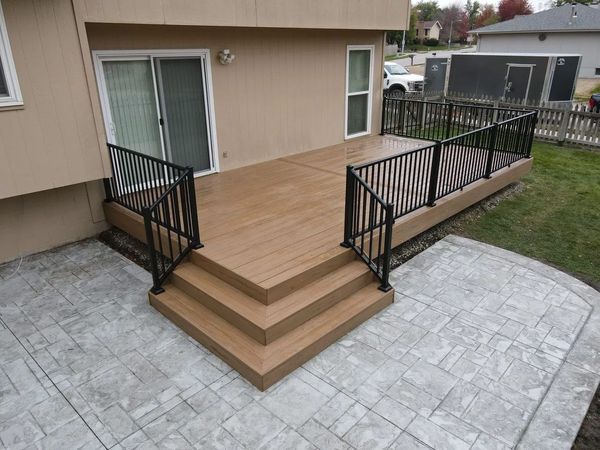
Building a low maintenance deck is the best way for homeowners in La Vista, NE to spend summers relaxing outdoors instead of sanding and staining every weekend. A truly low-upkeep deck means no annual sealing, no worry about rot from spring rains or insect damage, and none of the warping or splintering that Nebraska's freeze-thaw cycles and powerful thunderstorms inflict on traditional wood. This complete 2026 buying guide walks through the materials, structural choices, and simple care routines that deliver that hassle-free outdoor retreat.
Low Maintenance Deck Fundamentals for Nebraska Homeowners
Composite decking offers the most reliable path to an upkeep-free deck. Unlike first-generation uncapped boards, today's capped composite wraps a durable polymer shell around the core, blocking moisture and UV rays so the surface resists fading, stains, and scratches. Routine care is as simple as an annual wash with mild soap and water to clear pollen and debris, with no sanders or chemical strippers required. Instead of losing weekends to maintenance, you spend that time on backyard barbecues and quiet evenings on a deck that looks freshly built year after year. Choosing low-upkeep materials is an investment in both free time and home value.
Composite vs. Cedar: The Truth About Low-Maintenance Materials
When planning a deck in Nebraska, homeowners often weigh composite against traditional cedar, and both have a place. Cedar is a natural wood that breathes and shifts with humidity, lending it warm, authentic grain, but that organic nature demands yearly power washing, sanding, and resealing to prevent splitting and warping. Composite, an engineered product made from recycled wood fibers and synthetic polymers, stays dimensionally stable and resists rot, insects, and moisture. Because it never absorbs water, it never needs staining or sealing, just an occasional wash.
What Composite Decking Is Made Of
Composite decking blends recycled wood fibers with polyethylene or PVC, then caps the board with a protective polymer shell. That engineered composition blocks moisture and UV radiation, so the material will not warp or host mold, which is critical during Nebraska's humid summers and freeze-thaw winters. Cleaning is as simple as hosing off dirt and using mild soap, with no sealing required afterward.
Is Composite Worth the Cost?
Composite carries a higher upfront price, roughly $8 to $12 per square foot for capped boards versus $4 to $7 for premium cedar, but the long-term math favors composite. Professional cedar cleaning and resealing can cost hundreds each year, and over 15 years those expenses rival the higher initial investment in composite. With a 25- to 30-year lifespan and warranties often reaching 25 years, composite lets you avoid a second material purchase while enjoying decades of near-zero maintenance.
Material Installation and Durability Deep Dive
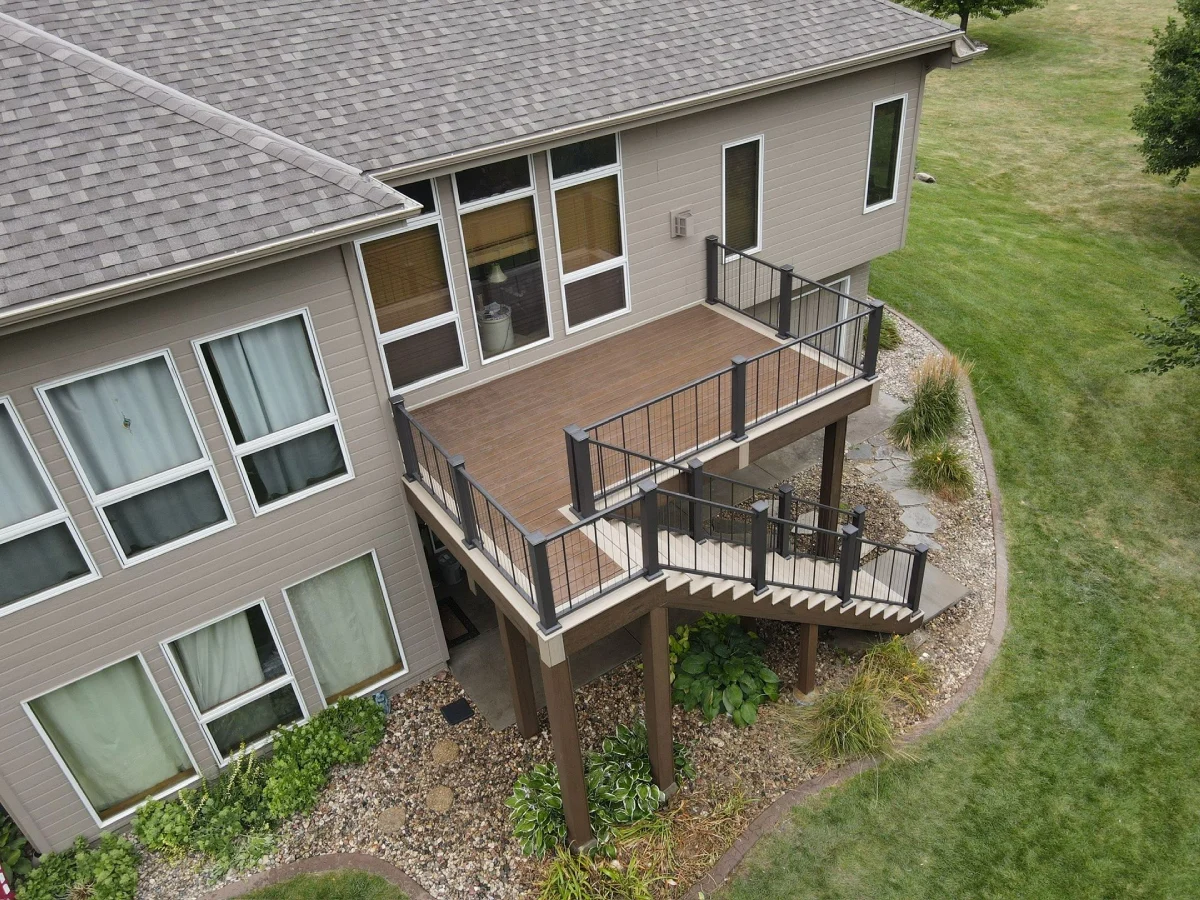
A low-upkeep surface is only half the story; what is underneath determines how long the deck stays trouble-free. Capped composite boards feature a synthetic shell that fully encapsulates the wood-plastic core, repelling liquid across all surfaces and preventing the swelling and surface checking that ruin uncapped products. A properly constructed capped composite deck can last 25 to 50 years, far surpassing the 10 to 15 year span of standard wood and translating directly into less annual upkeep.
The Role of Code-Compliant Deep Footings
Frost heave is one of the most destructive forces a deck faces in the Midwest. When soil freezes and thaws repeatedly, it lifts and shifts shallow footings, snapping fasteners and warping the framework. We combat this from the start by digging every footing to 42 inches, well below Nebraska's frost line. Because the structural skeleton stays fixed, there is far less stress on deck boards and connections, which means no mysterious pops, gaps, or squeaks demanding attention. A properly anchored deck is the hidden hero of any low-maintenance outdoor space.
Treated LVL and Steel Framing Options
While decking gets most of the attention, the framing determines long-term durability. Treated LVL resists the warping, twisting, and shrinking that plague pine because of its engineered layered construction, lasting 25 years or more. Steel framing goes further, unaffected by moisture or temperature change, with a structurally indefinite lifespan and zero framing-related maintenance. Both keep the deck flat and fasteners tight, eliminating the annual chore of pounding down popped screws, and both can span longer distances without bulky mid-span posts.
Integrated Drainage for Moisture Control
Water is the silent enemy of any deck, especially in a climate with heavy spring rains and snowy winters. When moisture gets trapped between boards and joists, it fosters mildew, accelerates rot, and rusts fasteners. Trough-style under-deck drainage systems capture and channel water away before it reaches the structural skeleton, keeping the substructure dry. Paired with composite or cedar, integrated drainage doubles down on the durability built into the footings and framing, leaving you with a healthier deck that needs little more than occasional surface care.
Effective Cleaning and Care for Composite Decks
A low-upkeep deck still benefits from a simple routine. In Nebraska we recommend cleaning twice a year, once in spring to wash away winter grime, de-icing salts, and pollen, and again in fall to clear leaves before they trap moisture under snow. Watch for green or black mildew, sticky pollen, a slippery film, or piles of wet leaves as signs it is time. Start with warm, soapy water and a soft-bristle brush; for deeper cleaning, use products formulated for composites. Avoid metal-bristled brushes, and if you use a pressure washer, keep it below 1,500 PSI with a wide nozzle at least 12 inches from the surface to protect the capstock and warranty.
Protecting Your Deck Through Nebraska Winters
Before the first freeze, clear leaves and debris from between the boards, since trapped moisture breeds mold that can stain composite by spring. When snow falls, use a plastic shovel rather than a metal one to avoid gouging the surface, and skip ice melt products containing calcium chloride, which can permanently discolor composite and void the warranty. Letting snow melt naturally or using sand for traction keeps the deck spotless and ready for warm-weather entertaining.
When Cedar Is the Right Low-Maintenance Choice
Cedar can still be a smart low-upkeep option in the right setting, such as a screened-in porch or covered area with good drainage. Using only penetrating oil finishes, never varnish or polyurethane, prevents peeling. We frame every cedar deck with deep footings and treated LVL or steel, identical to our composite builds, so the structure matches the longevity of the surface. When those conditions are met, you get the warmth of natural wood without the constant refinishing.
Your Path to a Hassle-Free Deck in La Vista, NE
The path to your dream low maintenance deck begins with a free, no-obligation onsite estimate, where we listen to your vision and assess your property in La Vista or anywhere across the Omaha metro. From there we handle everything, from permits and code-compliant deep footings to material selection and scheduling, so the project stays truly hassle-free. As a family-owned business with more than 40 years of experience and a Best of Bellevue award, we build with premium materials like TimberTech composite and cedar. Explore our composite deck options and contact us for a free estimate to start designing an outdoor space you will enjoy for decades.
Ready to start your project?
Big Pine Decks has crafted heirloom-quality outdoor living spaces across the Omaha metro and western Iowa for over 40 years. Family-owned, licensed & insured, and proud winners of the 2025 Best of Bellevue.